
Action
Our Purpose
We take action by providing internet access and restoring donated devices, enabling individuals to connect with the global community, access education, and build a stronger future. Every project we complete is a step toward connection, dignity, and hope


We are a non-profit organization dedicated to supporting underserved communities, with a focus on the Middle East and North Africa. Our mission is to build community centers and provide access to free and open internet for communities that face restrictions, lack of resources, and limited freedom.
In many of these countries, populations are growing and there is an increasing need for access to essential tools and opportunities. Through our organization, we create support systems to meet these needs.
We collect donated devices such as laptops, smartphones, starlink mini devices, and tablets, prepare them for use, and distribute them to individuals in need. In addition, we work to provide reliable internet access so they can connect with the free world.
Our goal is to empower these communities by giving them the ability to communicate, learn, and grow. With access to technology and the internet, they can engage in open conversations, receive education in various fields, and build a better future for themselves.


Initiatives
Global Internet Censorship and the Rise of National Intranets
As of 2026, the digital landscape is increasingly divided. While some countries maintain open access, others have moved toward a "splinternet" model, where the internet is either heavily filtered or replaced by a state-controlled alternative.
Countries with High Restrictions
Based on the Global Internet Censorship and Filtering Index (2026), several nations stand out for their systematic control:
-
North Korea: Often cited as the world's most restrictive environment, it utilizes a national intranet called Kwangmyong. It is completely isolated from the global internet, accessible only to a small elite and monitored government officials.
-
China: Operates the "Great Firewall," a sophisticated combination of legislative measures and technologies (like DNS poisoning and IP blocking) to filter foreign content and monitor domestic traffic.
-
Russia: In 2026, Russia has taken a lead in censorship, aggressively blocking independent news (e.g., Meduza, Bellingcat) and messaging apps like Telegram and WhatsApp to control the domestic narrative.
-
Iran: Uses a multi-layered approach, including the National Information Network (NIN), often referred to as a "halal internet," which provides high-speed access to state-approved services while throttling or blocking international sites.
Why Do Countries Use National Intranets?
Governments implement national intranets for several strategic reasons:
-
Information Control: By creating a "walled garden," authorities can ensure that only state-sanctioned news and cultural content reach the public.
-
Surveillance: Domestic traffic is easier to monitor and log within a controlled national network than on the open web.
-
Cyber Sovereignty: It reduces dependence on foreign (primarily Western) infrastructure and companies, theoretically protecting national security and the economy from external digital influence.
-
Operational Continuity: A national intranet allows essential services (banking, government, utilities) to remain functional even if the country is disconnected from the global internet.
The January 2026 Internet Shutdown in Iran
On January 7 and 8, 2026, Iran experienced a critical escalation in digital control.
What Happened?
-
The Blackout: Following weeks of localized disruptions during nationwide protests, authorities-initiated a near-total nationwide internet and telecommunications blackout on January 8.
-
The Scale: Connections dropped to approximately 6.5% of normal levels. This affected not only mobile data (MCI, Irancell) but also landlines and land-based internet services.
-
The Aftermath: Human rights organizations, including Amnesty International, reported that the shutdown was used to provide "digital cover" for security forces. Without the ability to livestream or share information, the true extent of the crackdown on protesters was hidden from the international community for days.
Bridging the Gap: Net Equity Alliance
The Net Equity Alliance is a non-profit organization dedicated to restoring digital rights and providing connectivity in regions facing total communication blackouts.
The Stratospheric Solution
To circumvent ground-based censorship and physical infrastructure cuts, the organization is developing a High-Altitude Platform Station (HAPS) module.
-
The Impact: This creates a "sky-bridge" that restores basic communication, allows for the documentation of human rights issues in real-time, and provides an unfilterable path to the global internet during crises like the January 2026 blackout.
Starlink
The Situation in Iran
Iran has launched a severe crackdown on Starlink users, treating the service as a major security threat. Military-grade jamming has dropped Starlink's performance by up to 80% in some regions.
Why Starlink is Easy to Find
-
Visuals: The flat, rectangular dishes stand out on rooftops during routine physical checks or drone flyovers.
-
Heat: The dishes emit a strong thermal signature that infrared cameras and military drones can spot from the air.
-
Radio & Wi-Fi: Local authorities track the default Wi-Fi name (BSSID) and monitor radio frequencies to trace the signal back to its exact location.
Iran’s Two-Layer Playbook
-
Physical: Door-to-door searches, financial tracing, and checking rooftops.
-
Technical: Deploying specialized electronic warfare tools (like Russia's "Kalinka" system) to detect and jam frequencies, combined with local Wi-Fi scanning.
What Users Do to Hide (and the Risks)
-
Turn off default Wi-Fi: Putting the system in Bypass Mode shuts down the obvious Starlink Wi-Fi signature so a third-party router can be used instead.
-
Physical camouflage: Some users try hiding the dish or covering it, but disrupting its line-of-sight to the sky or trapping its heat can destroy the connection and ruin the hardware.
-
Bypassing Jamming: The most successful defense is turning on "Use Starlink positioning exclusively" in the app's advanced settings. This forces the dish to ignore fake, jammed GPS signals and map its location using the satellites themselves.

Starlink

Russia Unveils Advanced ‘Kalinka’ Electronic Warfare System

Russian Krasukha Electronic Warfare System. (Photo: Russian media)

Illustrative photo of a satellite dish stands in Mahdasht, 60 km west of the capital Tehran, Iran

sky-bridge
Internet Project for freedom
Thank you for helping us continue our project's mission. If you have any of the items listed below to spare, your donation would make a tremendous difference.
Note: For any generous contribution valued at $450 or more, we will provide a receipt for tax-deduction purposes. Please contact us via the email at the bottom of this page to coordinate.
We need a lot of this carbon fiber, and a lot of this resin, and a lot of this 3D printer filament.
1-Filament 1.75mm Black 4KG, PLA (Any color)

2-Carbon Fiber Fabric Roll Pure Fabric Carbon Fiber Sheet (Any size)

3-Carbon Fiber Epoxy and Hardener

4-Large Belt 3D Printer 1

How to set up a local independent network,
Atention
This section is for preparing an independent local network via Starlink for the period after the fall of the Islamic Republic in Iran to establish order. We do not offer such a local network at present prior to the fall, and all this information is for readiness and awareness for the post-fall period to reach a state of order. This method helps, in the absence of internet infrastructure, for an independent local network to facilitate communication and establish order.




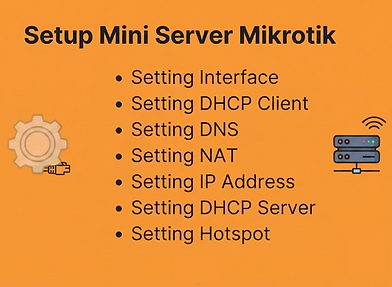
MikroTik Server Configuration Guide
1

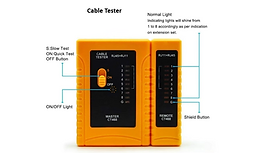
To set up a local independent network, you'll need the Starlink Gen 2 kit, which includes the dish, router, and power cables. You'll also need an Ethernet adapter to link the Starlink modem to your router with a LAN cable. The core of this system is the Mikrotik router, which acts as a central mini server for managing network traffic. For physical connections, use UTP or STP LAN cables, along with a PoE injector to power devices over the Ethernet. You'll also need a crimping tool for RJ45 connectors and a LAN tester to ensure everything is wired correctly. For more information, please check the list below.
2
Another great advantage of this local independent internet setup is the ability to grant internet access to others by creating a high volume of VPN tunnels. This allows users to connect either via Wi-Fi or directly through the local network to generate numerous VPN tunnels as demonstrated in the video.

Mobile Internet on the Street
A combination of a lithium battery, a Starlink Mini, and a femtocell requiring some programming and a new root inside allows all nearby phones to connect to the global internet within the Starlink bandwidth. By limiting data consumption, people can stay connected during internet blackouts, communicate with the world, and minimize suppression violence while maximizing communication.
Required items for this backpack: a Starlink Mini, a femtocell, a lithium battery, and some cables for connections.